
Protein Molecular Weight Markers

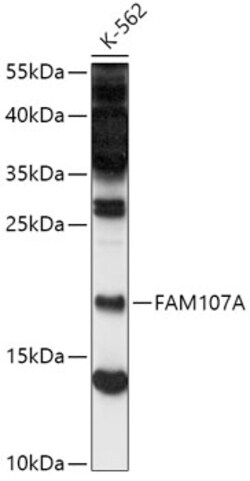
ABclonal Technology FAM107A Rabbit pAb

Predicted to enable actin binding activity. Involved in several processes, including negative regulation of G1/S transition of mitotic cell cycle, negative regulation of focal adhesion assembly, and regulation of cytoskeleton organization. Located in several cellular components, including focal adhesion, ruffle membrane, and stress fiber.

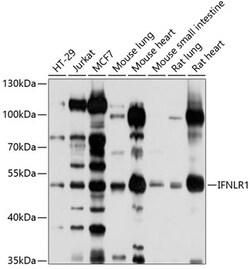
ABclonal Technology IFNLR1 Rabbit pAb
The protein encoded by this gene belongs to the class II cytokine receptor family. This protein forms a receptor complex with interleukine 10 receptor, beta (IL10RB). The receptor complex has been shown to interact with three closely related cytokines, including interleukin 28A (IL28A), interleukin 28B (IL28B), and interleukin 29 (IL29). The expression of all three cytokines can be induced by viral infection. The cells overexpressing this protein have been found to have enhanced responses to IL28A and IL29, but decreased response to IL28B. Three alternatively spliced transcript variants encoding distinct isoforms have been reported.

ABclonal Technology ENO3 Rabbit pAb
This gene encodes one of the three enolase isoenzymes found in mammals. This isoenzyme is found in skeletal muscle cells in the adult where it may play a role in muscle development and regeneration. A switch from alpha enolase to beta enolase occurs in muscle tissue during development in rodents. Mutations in this gene have be associated glycogen storage disease. Alternatively spliced transcript variants encoding different isoforms have been described.
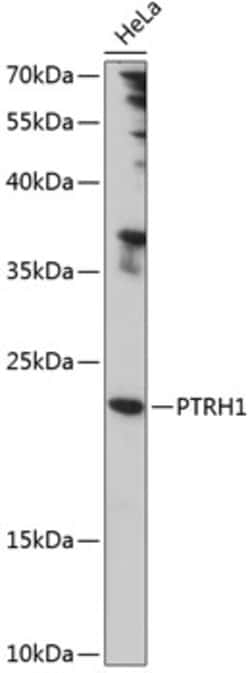
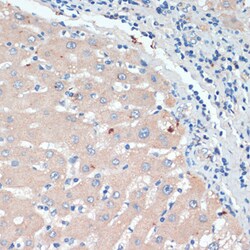
ABclonal Technology DBH Rabbit pAb
The protein encoded by this gene is an oxidoreductase belonging to the copper type II, ascorbate-dependent monooxygenase family. The encoded protein, expressed in neuroscretory vesicles and chromaffin granules of the adrenal medulla, catalyzes the conversion of dopamine to norepinephrine, which functions as both a hormone and as the main neurotransmitter of the sympathetic nervous system. The enzyme encoded by this gene exists exists in both soluble and membrane-bound forms, depending on the absence or presence, respectively, of a signal peptide. Mutations in this gene cause dopamine beta-hydroxylate deficiency in human patients, characterized by deficits in autonomic and cardiovascular function, including hypotension and ptosis. Polymorphisms in this gene may play a role in a variety of psychiatric disorders.
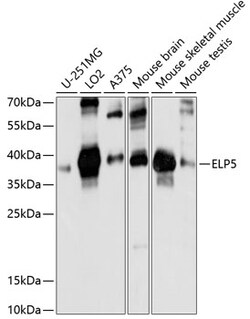
ABclonal Technology ELP5 Rabbit pAb
Predicted to contribute to tRNA binding activity. Predicted to be involved in positive regulation of cell migration and tRNA modification. Located in cytosol and nucleoplasm. Part of elongator holoenzyme complex.
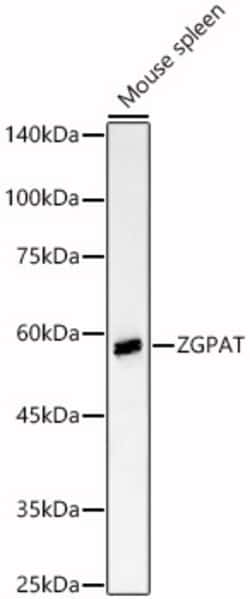
ABclonal Technology ZGPAT Rabbit pAb
Enables DNA-binding transcription repressor activity, RNA polymerase II-specific and RNA polymerase II cis-regulatory region sequence-specific DNA binding activity. Involved in negative regulation of epidermal growth factor-activated receptor activity and negative regulation of transcription by RNA polymerase II. Located in nucleoplasm and plasma membrane.
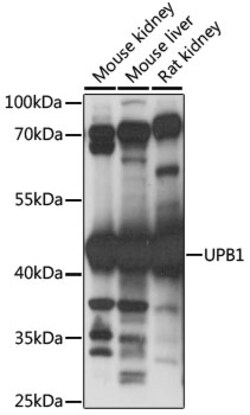
ABclonal Technology UPB1 Rabbit pAb
This gene encodes a protein that belongs to the CN hydrolase family. Beta-ureidopropionase catalyzes the last step in the pyrimidine degradation pathway. The pyrimidine bases uracil and thymine are degraded via the consecutive action of dihydropyrimidine dehydrogenase (DHPDH), dihydropyrimidinase (DHP) and beta-ureidopropionase (UP) to beta-alanine and beta-aminoisobutyric acid, respectively. UP deficiencies are associated with N-carbamyl-beta-amino aciduria and may lead to abnormalities in neurological activity.
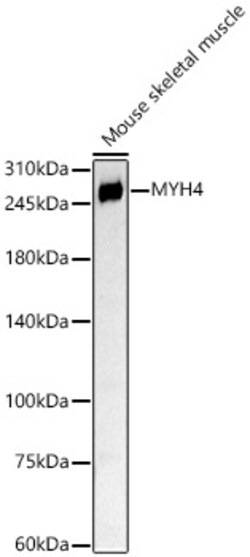
ABclonal Technology MYH4 Rabbit pAb
Enables double-stranded RNA binding activity. Involved in muscle contraction. Located in myofibril.
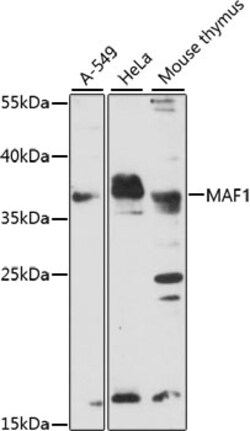
ABclonal Technology MAF1 Rabbit pAb
This gene encodes a protein that is similar to Maf1, a Saccharomyces cerevisiae protein highly conserved in eukaryotic cells. Yeast Maf1 is a negative effector of RNA polymerase III (Pol III). It responds to changes in the cellular environment and represses pol III transcription. Biochemical studies identified the initiation factor TFIIIB as a target for Maf1-dependent repression.
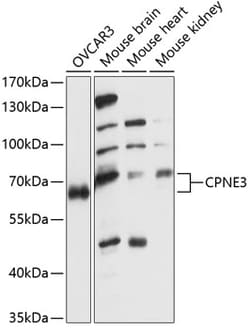
ABclonal Technology CPNE3 Rabbit pAb
Calcium-dependent membrane-binding proteins may regulate molecular events at the interface of the cell membrane and cytoplasm. This gene encodes a protein which contains two type II C2 domains in the amino-terminus and an A domain-like sequence in the carboxy-terminus. The A domain mediates interactions between integrins and extracellular ligands.
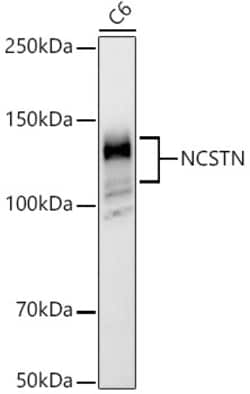
ABclonal Technology NCSTN Rabbit pAb
This gene encodes a type I transmembrane glycoprotein that is an integral component of the multimeric gamma-secretase complex. The encoded protein cleaves integral membrane proteins, including Notch receptors and beta-amyloid precursor protein, and may be a stabilizing cofactor required for gamma-secretase complex assembly. The cleavage of beta-amyloid precursor protein yields amyloid beta peptide, the main component of the neuritic plaque and the hallmark lesion in the brains of patients with Alzheimers disease, however, the nature of the encoded proteins role in Alzheimers disease is not known for certain. Mutations in this gene are associated with familial acne inversa. A pseudogene of this gene is present on chromosome 21. Alternatively spliced transcript variants of this gene have been described, but the full-length nature of some of these variants has not been determined.
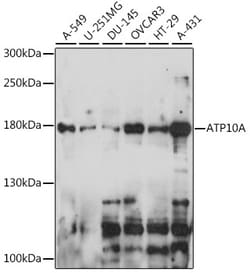
ABclonal Technology ATP10A Rabbit pAb
The protein encoded by this gene belongs to the family of P-type cation transport ATPases, and to the subfamily of aminophospholipid-transporting ATPases. The aminophospholipid translocases transport phosphatidylserine and phosphatidylethanolamine from one side of a bilayer to another. This gene is maternally expressed. It maps within the most common interval of deletion responsible for Angelman syndrome, also known as happy puppet syndrome.

